


Digital Journalism
JOUR-202, Prof Nich Perez and Prof Michael Todd
Multimedia Story -- Brandon Bishop
A Photo Can Give A Thousand Words: Essay
By: Charlotte Head
Brandon Bishop stood, heart pumping and knuckles white as he was restrained by the Bangladeshi military. He had just been detained while taking photos of dissidents during one of the most severe and violent political protests in the country’s history: The July Revolution. He was only 20, on a solo trip with no friends or family nearby. His mind raced with the worst-case scenarios.
Bishop, a Washington and Lee University senior, has a unique story to tell; one that has inspired many on the W&L campus, and he has given a voice to individuals who have been silenced.
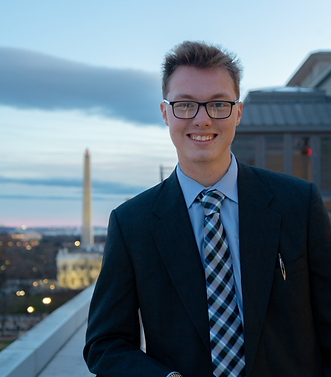
Headshot of Brandon Bishop (Brandon Bishop)
Bishop first picked up a professional camera in 2016 after his church group encouraged him to participate in a class. As he first looked through the lens and heard the shutter, he was hooked. Next thing he knew, he was in line on Black Friday, purchasing his own Canon camera.
While at W&L, he has balanced studying computer science and Middle East and South Asia Studies, and taking every photojournalism opportunity available. Before attending college, Bishop had never left the country, but now, he has traveled to over 20 countries. He made it a mission to use his skills to educate his peers about the world and the challenges people face.
In the summer of 2024, Bishop visited Bangladesh to learn more about and document the Rohingya refugees and their camps. The camp, located in Cox's Bazar, Bangladesh, is the largest refugee camp in the world, housing about 1.1 million people. The conditions are harsh with major overcrowding, food scarcity, and frequent disease outbreaks.
While there, Bishop immersed himself in the culture. He bought traditional dress and respected the cultural norms of the country. “I want to blend in. I don’t want to stand out as a foreigner. Because that also makes a lot of people very apprehensive to share their stories and become vulnerable with you.”
He connected with as many people as possible and quickly realized that he had never met a group as kind and generous as the Rohingya refugees. Meals were shared, stories exchanged and lessons learned.

While there, Bishop immersed himself in the culture. He bought traditional dress and respected the cultural norms of the country.
He connected with as many people as possible and quickly realized that he had never met a group as kind and generous as the Rohingya refugees. Meals were shared, stories exchanged and lessons learned.
“[This] kindness was really what showed me around and what helped me see the realities of what was going on,” Bishop said.
As his trip progressed and he continued to take photos of the camps and inhabitants, Bishop was stopped by barricades on the way to visit Lalbagh Fort; the start of the most violent and extreme political protest in Bangladesh’s history broke out.
Four Rohingya refugees cross a bridge over the camp's only sewage system (Brandon Bishop)

A Dhaka University student waves the Bangladeshi flag in front of the police, just days before police began their massacre of 1,400 students in reaction to the Quota protests in June 2024. (Brandon Bishop)
The July Revolution was a response to a governmental change that would allow the government to hire political allies of the prime minister into government jobs. “A lot of these jobs were the pinnacle jobs in Bangladesh. They were high-paying, high-benefits,” Bishop said. “They were the type of jobs where every parent would be proud for their kid to work.” It was this governmental abuse of power that was the catalyst for Dhaka University students to protest.
As he walked down the streets that once felt welcoming and calm, thousands of students and citizens were waving posters and chanting for more equality and less corruption.
As he tried to enter the town of Mirzapur, where much of the fighting was happening, Bishop was detained for what the Bangladesh police explained as his safety. After multiple hours in custody, the officers told him to contact anyone he knew and could trust to house him until he could return to America. He put faith in the locals he met, and after cold-calling a woman, Tashmia, he met in a coffee shop, he was released.
He went to Bangladesh with a goal to help others – to learn about injustices and give a voice to the voiceless – but instead, the people around him in Dhaka and Cox's Bazar helped him.
As he drove to Tashmia’s house, tanks drove by, and soldiers with machine guns roamed the streets.
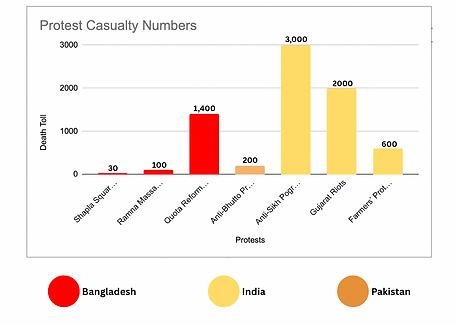
During a report by The U.N. Human Rights Office, it was estimated that 1,400 civilians died during the event. Many of those people were university students who were petitioning for more political equality and the end of the corrupt employment system. The July Revolution, also known as the Student-People's Uprising, was the deadliest and most severe in Bangladesh’s history and high ranking comparatively to nearby countries’ protests.
At Tashmia’s house, Bishop was given a bed, food and safety when he otherwise would be left stranded. The whole city was on lockdown, forced to stay indoors and lay low. The government disabled cell towers, so Bishop was unable to contact home – his loved ones were not even aware of this protest or the lockdown. Bishop had never been more scared. He was fearful of the violence going on outside and of the unknown for when he could go home, but he was not scared of his safety. These strangers opened their homes to someone in need.
Bishop traveled to Bangladesh to photograph the Rohingya refugees and their reality, and bring that story home. He always had the dream to give a voice to those who have been silenced. Although he did give a voice to these Rohingya people, his story grew to be so much deeper than just documenting their daily lives, their houses, their people. It became a story about the people who helped him and opened their homes and hearts to Bishop rather than simply the problems the country faces.
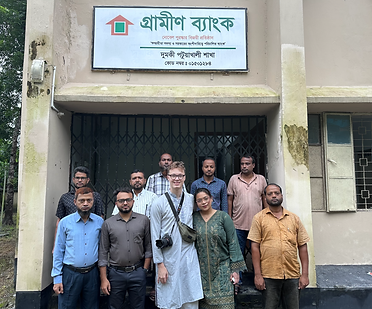
Bishop left Bangladesh after 10 days in lockdown with Tashmia’s family, but he knew as he took off back to America, that he soon would be back in Bangladesh. Despite the trauma and the fear he once felt, what was important to him was the relationships he built in Dhaka. The following summer, he interned at Grameen Bank in Dhaka and officially married the woman who saved him from detainment, Tashmia.
Back in America, Bishop has used his stories and his photos to educate others about both the injustices in Dhaka and Bangladesh, and also shares the impact the Bangladesh people had on his experience. He has used social media, his portfolio website and word of mouth to spread awareness on Bangladesh’s issues and the conflict the refugees face. Brandon works with peers and professors to educate on such an underrepresented topic. “I think a lot of people are in the same boat [of not knowing much about Bangladesh],” Bishop said. “But I think that is what makes it all the more meaningful. My experiences there and being able to bring them back.”
Brandon Bishop standing among other employees during his internship at Grameen Bank in 2025. (Brandon Bishop)
Additionally, Bishop will be featured in an article by professional writer and storyteller, Kelsey Goodwin, for the University Columns. So now, through Brandon’s story the lives, struggles and of the Bangladeshi people that he met will be spread through campus, alumni and beyond.
He has showed his peers, coworkers, professors, family members through his images and stories that despite the cultural and geographical differences, everyone wants the same things. “Everyone wants family, equality, everyone wants to know where their next meal and where a roof over their head will be.” Brandon’s impact will not end here. He aspires to become a diplomat and continue to travel and use his photojournalism skills to do good.
“No matter the borders that separate us, the people are the same and all people want the same things.”
A Photo Can Give A Thousand Words: Podcast
By: Charlotte Head


Transcript: Speaker 1 Brandon Bishop, a Washington and Lee University senior, is a photojournalist and a documentarian who has traveled all over the world to capture protests and hardship. Bishop has a unique story to tell, one that has inspired many on the W&L campus, and he has given a voice to individuals who have been silenced. In 2024, Brandon traveled to Bangladesh, but he left with more than just photos. Speaker 2 But I think the place that's really been most impactful for me and most influential was Bangladesh. Like I said, I originally went to photograph the Rohingya refugee camps, the largest refugee camps in the world, but it quickly evolved into something a lot more. Speaker 1 The summer of 2024 marked one of the darkest and most violent moments in Bangladesh's modern history, the July Revolution. Speaker 2 They were protesting against a government change that would essentially put political allies of the prime minister into government jobs. And a lot of these government jobs were the pinnacle of jobs in Bangladesh. They were high paying, high benefits, and they were the type of jobs where every parent would be proud for their kid to work. So this sort of inequality of putting political allies rather than it being very meritorious was what caused the Dhaka University students to protest against it. It quickly evolved into a lot more, turned into eventually overthrowing the government. But that experience was really influential to me, and I had the chance to take a lot of great photos, hear a lot of great stories, and bring them back in the form of some photojournalism. Speaker 1 However, Brandon's trip in Bangladesh didn't go as planned. Speaker 2 During this time, it was quite scary. and I didn't know what was happening or what would happen because every single day was getting bigger and bigger. And then one day I was detained by the military trying to prevent me from going to a region called Mirpur, which was where a lot of the fighting was taking place. And they basically told me, we're not going to let you go unless you call a Bangladeshi who you'll have to stay with and you'll have to stay inside. Thankfully, I met someone earlier in my trip. I'm at a cafe. So I called her. She came and got me. And then I went to her house with her and her family. And about three hours after reaching her house, the government shut down all cell network, all Wi-Fi networks, everything. So then all of a sudden, there was no contact with the outside world. There was no way of knowing what was actually going on in the streets. Speaker 1 Although the protests and the violence caused Brandon fear and anxiety, what he deemed as most important was remembering how kind and generous the people he interacted in Bangladesh were. Speaker 2 Initially, I didn't have any contacts in the camps, and it was really a struggle. The first week in Dhaka, I was trying to find somebody who could put me in touch. And there was these protests on the streets, and I was walking around photographing. A lot of people would come up to me asking, hey, where are you from? What are you doing here? And I would ask each and every one of them, hey, do you know anybody in the refugee camps? Anybody you can put me in contact with? And there was one individual who he had done an online English course, and one of his classmates was a Rohingya refugee. So he put me in contact with this refugee, Mr. Alam, and I got the chance to be in contact with him, and he invited me to show me around the camps. So I traveled down to the southeast region of Bangladesh near Cox's Bazar, and he was a really good guide, Mr. Alam, and he showed me around his home camp, but then he also showed me around other camps. And it was really interesting because he was also able to translate translate for me some of the stories and hearing about people that perhaps were shot by the Myanmar military or were injured while crossing the border. Speaker 1 As he left Bangladesh after 10 days in lockdown, Brandon knew he would be back to the country soon. But before then, he knew that his story of the people, their drive for equality and freedom was something that needed to be shared. He used his voice to give a voice to others. Speaker 2 So Bangladesh and South Asia as a whole is a region that I think a lot of people don't know that much about. And my experiences in Bangladesh have been really impactful to a lot of people I've told my story to, whether it be professors, students, family members, classmates, co-workers. Everyone has really been impacted by my experience. My grandma didn't even know where Bangladesh is, and I think a lot of people were in the same boat. But I think that makes it all the more meaningful, my experiences there, and being able to bring it back. for example, I remember sharing my photos with one of my professors and close mentors here. And I remember at first he just went, wow, and he just looked at them for a little bit. And then he mentioned that one of them really stood out to him because it reminded him of when he was an elementary school teacher and just seeing the children in their classroom reminded him of that. And despite These children being so far away, having to fight for their education and fight for their right to education, they're still doing everything they can. And although the experiences themselves were quite scary and not always the most positive, the people themselves were really what brings me back to Bangladesh. And I think it really highlights the fact that governments aren't their people. Governments a lot of times represent just the elite and not the people themselves. I think Bangladesh is a wonderful example of that. The people were so kind the entire time I was there, from one guy on the street randomly giving me a contact of a classmate he had in an online English class to another individual just showing me around despite not even speaking the same language as me. And being able to share my experiences in Bangladesh, I think, has helped people realize that, that no matter how many borders separate us, all people are the same and all people want the same things. Speaker 1 Brandon isn't stopping here. He plans to graduate and pursue philanthropic work around the world while also continuing to take photos. He aspires to become a diplomat and continue to use his voice for good. His impact on W&L's campus is powerful, and he's even going to be featured in a University Columns article written by professional writer Kelsey Goodwin. Thank you for listening. This is Charlotte Head.
A Photo Can Give A Thousand Words: Photography
By: Charlotte Head
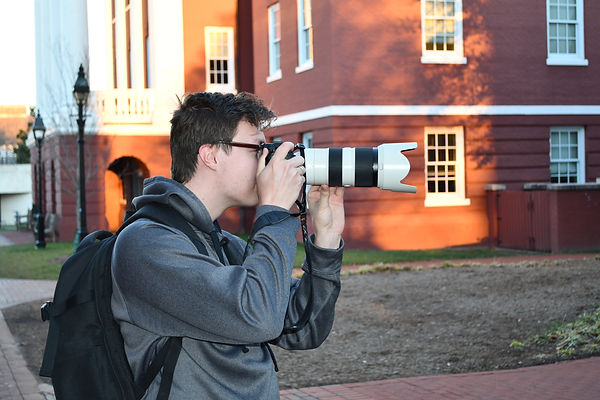
While at W&L, Brandon practices his photography to refine his skills. On Thursday, Dec. 4, 2025 he got outside to shoot the academic buildings and practice new lighting and angle techniques. (Charlotte Head)

After Brandon shoots his photos, he takes time to edit each. He carefully considers lighting, the frame, and the contrast to ensure the image is not only aesthetically pleasing but tells the story he wants to create. (Charlotte Head)
A Photo Can Give A Thousand Words: Bibliography
Lexington Life -- Cupcake Heaven
On this episode of Lexington Life, a podcast dedicated to highlighting the amazing shops, opportunities, people, and activities in our city, we highlight a local bakery and cafe and hear the owner's backstory.
Photo Story -- Stacy Head


Stacy Head was diagnosed with breast cancer in 2023. After surgery and medication, she survived and beat the disease. Now, she prioritizes her health to ensure her hormones are regulated and the chances for relapse. She is now a part of the New Orleans Branch of Survivor Rowing Club. These 10 images reflect her experience taking care of herself physically and mentally and becoming part of a team dedicated to helping women with breast cancer.
Broadcast-Style Video Package
As Washington and Lee University changes their admissions policies to become need blind, on-campus tours are more and more important. This short broadcast by Charlotte Head and Hannah Bishop gives us a glimpse into the tour guide application process and why W&L tours are so unique.
